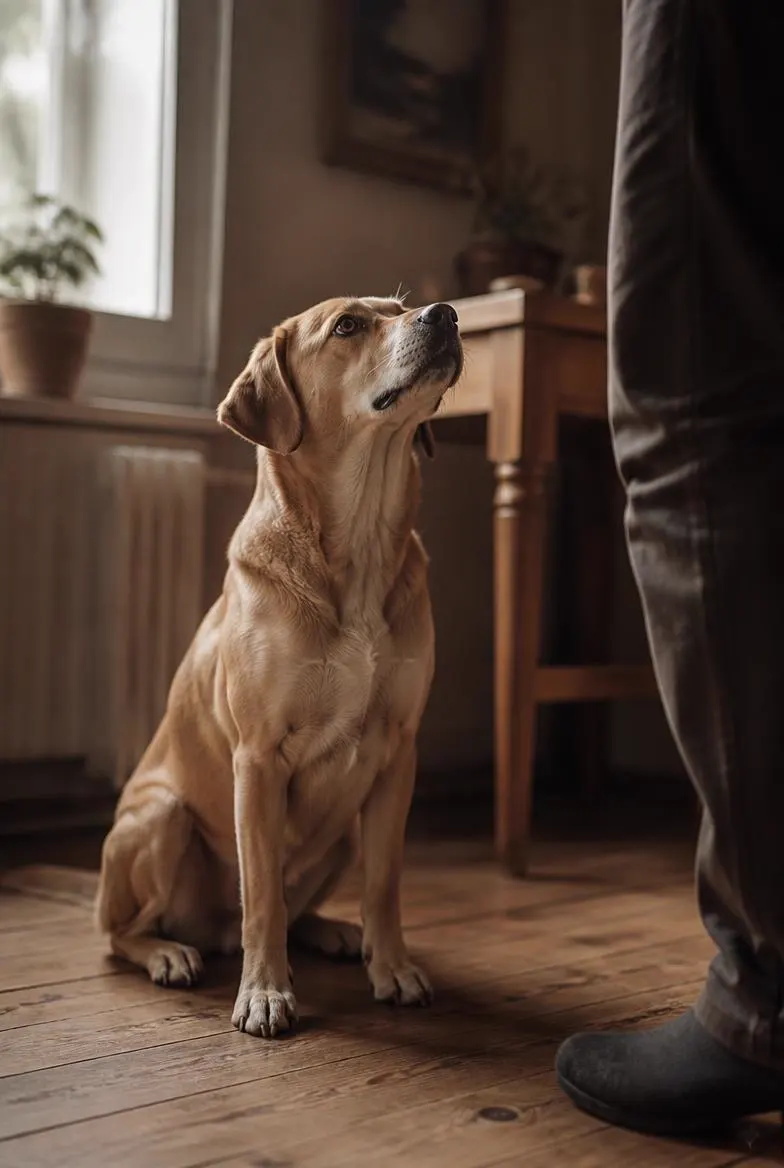
- How can I tell if my dog is happy?
- Compare your dog to your dog. A relaxed body, an easy appetite, sleep that looks like rest rather than retreat, and a willingness to start things — a game, a greeting, a walk — are the broad strokes. But the reading that actually means something is whether those things look like they did a month ago. Your dog's ordinary is the measure, not a general standard.
- What does an unhappy dog look like?
- Usually not drama. It tends to look like a smaller life: fewer approaches, less interest in the things they used to seek out, more time spent in the quietest room in the house. Any of those can be an ordinary week. What makes them worth attention is when they hold, and when they are new for that dog. A change that lasts a couple of weeks is worth a word with your vet, mostly to rule the simple things out.
- Does my dog know that I love them?
- As far as anyone can tell, yes — though not in words. Dogs read predictability: the same person arriving at roughly the same time, food that comes without a fuss, being touched in ways they can anticipate. Affection registers as safety more than as sentiment. Ordinary consistency is the loudest thing you do.
- Am I doing enough for my dog?
- Almost certainly. The things that make a dog's life good are unspectacular and repetitive — a walk that smells interesting, someone to be near, a routine that holds. Very few dogs need more enrichment; most need what they already have, delivered reliably. If you are asking the question at all, you are already the kind of person the question is not about.
- Is my dog bored, or just resting?
- Dogs sleep a great deal, and a sleeping dog is usually a content one. Boredom looks like unspent energy, not stillness: restlessness in the evening, invented jobs, an interest in your shoes. Rest that follows a good walk is not sadness. The difference, again, is against your own dog's usual pattern rather than a rule about hours.