New rescue · The first weeks

You don't know their whole story yet. That's the beginning, not a problem.

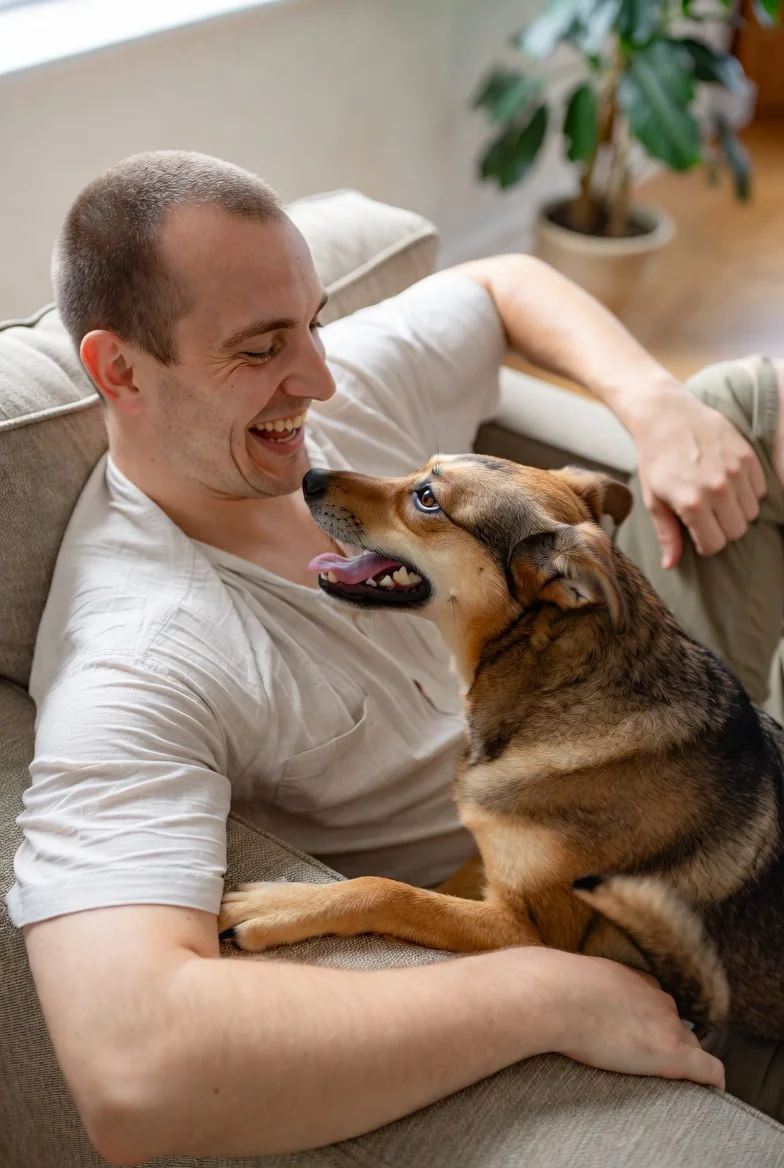
A newly adopted dog arrives carrying a history you can't read. The quiet dog and the bouncing-off-the-walls dog are often the same dog, a few weeks apart. Give it time — you're both just getting started.

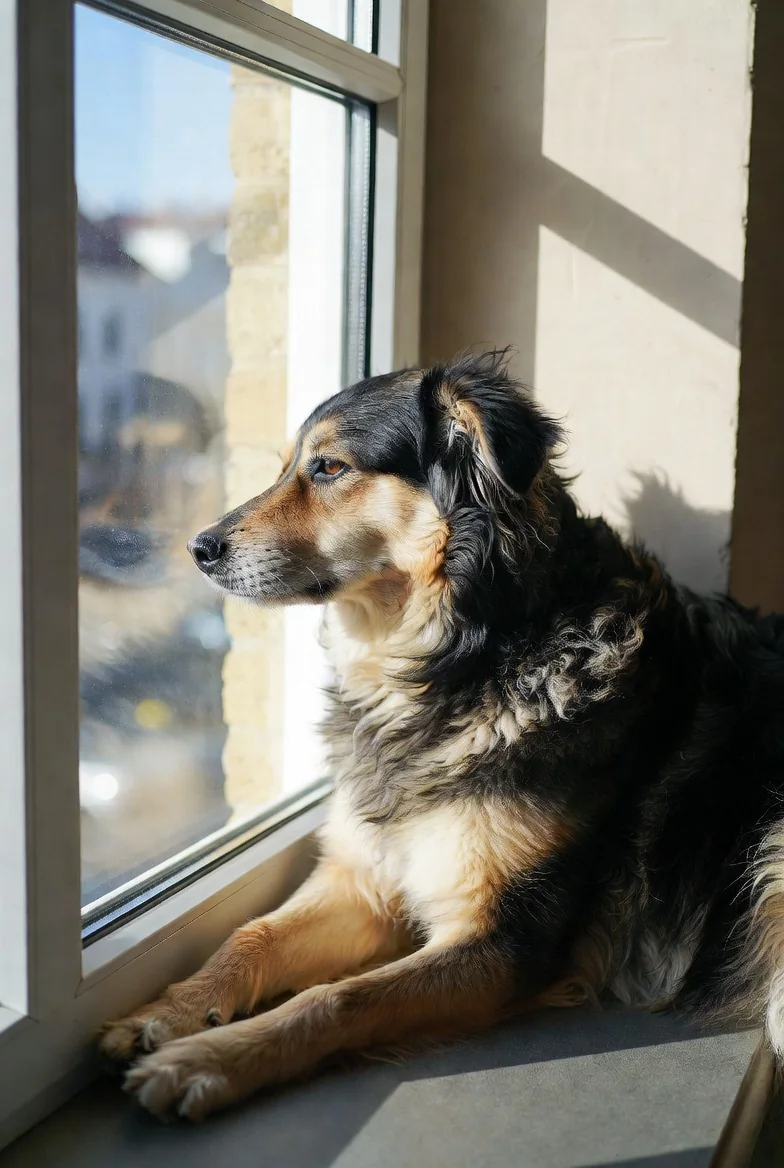
A newly adopted dog resting on a sunlit windowsill, watching the street outside

What's happening

They're decompressing, not misbehaving.

The first days in a new home are a nervous system catching its breath. Some dogs shut down and sleep for a week; others are wired and can't settle. Neither is their real personality yet — it's a dog working out whether this place is safe.

The rough rule is three days to decompress, three weeks to learn the routine, three months to feel at home. Slower is normal.

They're decompressing, not misbehaving.

What you might notice

Shadowing, hiding, and a dog who seems to change every week.

They might follow you room to room, or tuck themselves somewhere small and stay there. Appetite can come and go. House habits from before may not travel.

As they relax, you'll often see 'new' behaviours appear — that's not backsliding, it's a dog finally comfortable enough to be themselves. None of it means you chose wrong.

Shadowing, hiding, and a dog who seems to change every week.

What helps

Less, slower, and a predictable day.

A calm, repeating routine does more than any single thing you could teach — same walks, same meals, same quiet corner that's only theirs. Let them come to you rather than reaching for them.

Skip the big introductions, the crowded park, the houseful of visitors for now. The pressure you take off this week is what lets trust arrive on its own.

Less, slower, and a predictable day.

A real example

This is what one morning looks like.

Not advice in general — one thing to notice about your dog today, and one thing to try.

An example for a newly adopted dog.

Encourage slow eating today

Since they are roughly three years old, many adult dogs enjoy a bit of a challenge around mealtime. Instead of putting their food in a bowl, scatter about a quarter of their daily kibble portion on a dish towel on the kitchen floor. Let them sniff and eat the scattered pieces. This encourages them to use their nose and slows down mealtime.


Try this today

Scatter a quarter of today's kibble on a dish towel on the kitchen floor to start the day.

The questions of the first weeks

How long until a rescue dog settles in?
Often the 3-3-3 rhythm: about three days to decompress, three weeks to learn your routine, three months to truly feel at home — but every dog runs their own clock.
My rescue dog is hiding or won't eat — is that normal?
Very common in the first days. Give them a quiet, safe spot, keep the house calm, and let them come out on their own timing rather than coaxing.
Why is my dog acting differently than at the shelter or foster?
Shelters and foster homes see a stressed, muted version. As your dog relaxes, their real personality starts to show. That's a good sign, not a problem.
Should I start training right away?
Keep it light and let bonding come first. A predictable routine and gentle patience teach more in the early weeks than formal training does.
What if I don't know their history?
You don't need it. Amble gets to know the dog in front of you from today forward — no past required.

And you grow together

Their story with you starts now.

You may never know their first chapter, and that's alright — the one you're writing together begins today. As your rescue settles and shows you who they are, Amble learns alongside you, so the cards become about this dog and no one else's. Whatever they arrived carrying, they get to put some of it down here.

Their story with you starts now.

Start with your dog.

Takes about a minute. Free to start.

Step 1 of 8