Puppy · Fear period

Yesterday the trash can was fine. Today it's terrifying.

Sudden wariness of familiar things. Startling at sounds they slept through last week. Backing away, freezing, wanting to be near you. It usually shows up in a normal window somewhere around eight to fourteen weeks, and often again in adolescence. One calm card each morning helps you meet it — free, about a minute.

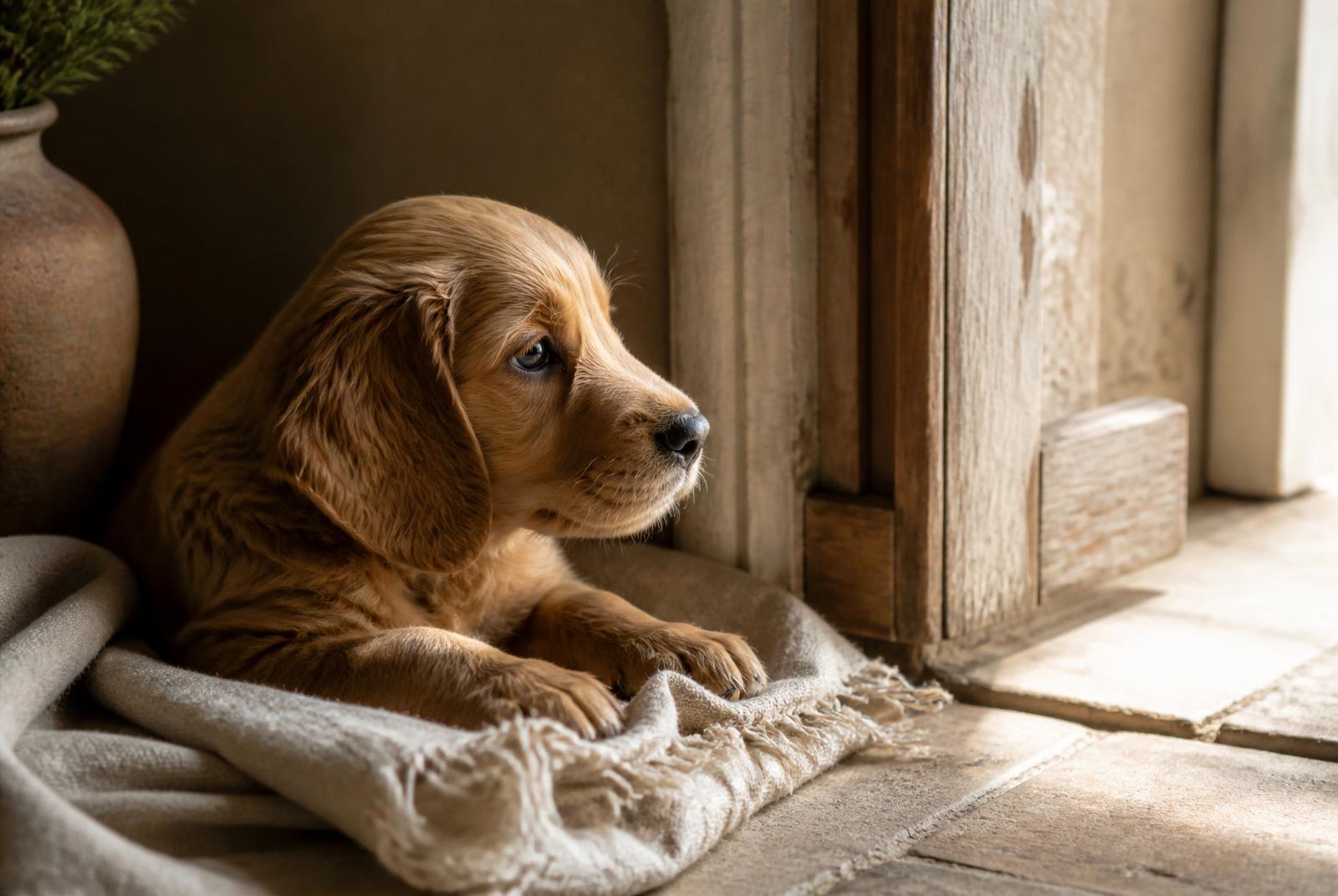
A young puppy resting on a linen blanket by a doorway, looking out into soft morning light

What's happening

This isn't a setback. It's a stage.

A fear period is a developmental window — not a regression, and not something you caused. For a couple of weeks your puppy's brain is recalibrating what counts as safe, and the answer temporarily becomes: less than before.

It usually lands somewhere around eight to fourteen weeks, and often turns up again in adolescence. Puppies who go through one don't become fearful dogs. They're growing up on schedule.

This isn't a setback. It's a stage.

What you might notice

The bin. The bike. The neighbour they liked last week.

Sudden wariness of familiar things is the signature. So is startling at sounds they slept straight through a fortnight ago, backing off, freezing mid-walk, or wanting to be closer to you than usual.

It rarely arrives all at once. Most people notice a run of small odd moments first, and only afterwards realise what they were looking at.

The bin. The bike. The neighbour they liked last week.

What helps

Distance, short encounters, and your ordinary voice.

Let them retreat when they want to. Moving away is how a puppy tells you they need a moment, and allowing it is what keeps the world negotiable. Keep encounters short and easy, and end them while things are still going well.

Comfort is fine. Sitting with a frightened puppy does not reinforce fear — fear is a feeling, not a behaviour you can accidentally reward.

Distance, short encounters, and your ordinary voice.

What to avoid

The one thing that makes it last longer.

Don't force the introduction, and don't hold them near the thing until they cope. Pushing a puppy through a fear period outlasts the fear period itself — that's the version people are still working on months later.

No big scenes, no coaxing them closer, no repeat exposure to prove a point. Short, good experiences at their own pace are what carry over.

The one thing that makes it last longer.

A real example

This is what one morning looks like.

Not advice in general — one thing to notice about your puppy today, and one small thing to try.

An example for a young puppy.

The biting is a reach for the world, not an attack

When a puppy who is roughly four months old gets teeth on your hands, she is just finding out how things hold together.


Try this today

Keep a spare rubber toy or a frozen washcloth in your pocket to offer the moment those teeth appear.

The questions this week

Is a fear period normal?
Yes. Most puppies go through at least one, commonly somewhere around eight to fourteen weeks, and many have a second in adolescence. It's a normal part of growing up, not a sign that something has gone wrong.
Should I comfort my scared puppy?
Yes. Comforting a frightened puppy does not reinforce fear — fear is a feeling, not a behaviour you can accidentally reward. Sit with them, keep your voice easy, and let them decide when to come out.
How long does it last?
Usually a couple of weeks. It tends to fade quietly rather than end on a particular day, so you often notice afterwards that they've stopped flinching at something.
Will they grow out of it?
Almost always, especially when the weeks are kept low-pressure. What you do now matters less than what you don't do: no forcing, no flooding, no big scenes. Short, good experiences at their pace are what carry over.
And it grows with them

There's usually a second one, later.

Adolescence often brings another wary stretch — the same dog, suddenly suspicious of a wheelie bin they've walked past a hundred times. Then it settles, and adulthood is steadier than any of this suggests. Amble shifts as your dog does; the cards you get at ten months won't be the ones you get this week.

There's usually a second one, later.

Start with your puppy.

Takes about a minute. Free to start.

Step 1 of 9